WELCOM IN MY SITE
LET'S JOIN AND LEAVE YOUR COMENT

Minggu, 25 November 2012

Mid-Term Exam Answers Chemistry of Natural Products


1. Extraction with supercritical fluid

fig. 1 supercritical fluid
To improve the productivity and increase the quality of the extraction of the active compounds of natural ingredients is the diversification of the isolation of natural products. During this period, the local industry is still based on conventional separation technologies such as steam distillation or extraction with organic solvents. If we start with separation using supercritical fluid technology. Besides staying as digadang separation technology greener, supercritical fluid also offers a performance that is often superior to conventional technologies. In fact, this technology has been used for the removal of caffeine in coffee.
fig. 2 Fluid phase diagrams and territories supercritis
In a nutshell the fluid is a supercritical fluid in a state above the critical temperature and pressure so as not to show any phase separation. Supercritical fluid can diffuse in a solid-like behavior of gases or other substances may dissolve as liquid behavior. So far that is commonly used in the extraction is a mixture of natural material supercritical fluid CO2 (carbon dioxide). Moreover, CO2 methanol, or a combination dimetilether with additive methanol, dimetilether, or the water can also be applied to the separation of the active compound.
use of supercritical CO2 is more advantageous in the extraction process especially to reach the supercritical state has enough pressure 73.9 bar and temperature of 31.1 ° C, which is said relatively soft (compared to methanol which require conditions of 239.5 ° C and 81 bar). CO2 in supercritical conditions, a variety of target compounds will be no change or chemical damage. The course of the process can be fairly simple and can be applied directly on the solid material, such as shredded leaves. After solubilization and extraction process repeatedly, fluid mixture and the active ingredient may be separated with a lower pressure. CO2 supercritical fluid has properties of non-polar and easier to melt the fat while the most active compounds that have economic value is polar. The problem is easily solved in the process of extraction liquid with a little 'longer as a regulator of polarity, such as water or methanol. Many studies have shown that the extraction with supercritical fluid selectivity is higher using conventional means. It is mainly influenced by the physico-chemical properties of the fluid and mass transfer occurring. Meanwhile, if the separation were performed using solvents water, as the system of steam distillation, almost all of the polar active compounds will be transported.

2. Natural ingredient compounds can be synthesized in the laboratory by:
  • Cold extraction

          a. Maceration method The maceration is a penyarian easily done by immersing the powder in the  liquid botanical penyari for a few days at room temperature and protected from light. Maceration method used to sum up bulbs that contains chemical Komonen penyari soluble liquid, containing benzoin, tiraks and candles.
The advantage of this method is simple equipment. Moderate losses include the time required to extract the sample long enough, penyari fluids are being used more, can not be used for materials that have a hard texture as benzoin, tiraks and candles.
Maceration method can be modified as follows:
 Change maceration circular
 Change digestion maceration
 Change Maceration circular Multi
 Change remaserasi
 Changes stirrer machine
 Soxhletasi Methods
          b. Soxhletasi is penyarian vegetable sustainable, heated so as to evaporate the liquid penyari, penyari liquid molecules of condensed vapor in the water for cooling back and summarize raw klongsong and then again in round-bottomed flask after passing through the siphon tube. 

The advantage of this method is:
- Can be used to sample the texture is soft and not resistant to direct heating.
- Used or less solvent
- or heating can be arranged

The disadvantage of this method:
- Since the solvent is recycled, extract collected in a container near the heated continually so as to cause a decomposition reaction by heat.
The total number of compounds or extracts will exceed their solubility in specific solvents that can solve in the container and need more volume of solvent to dissolve it.
- When done on a large scale, may not be suitable for use with solvent boiling point is too high, such as methanol or water, since all the tools are under komdensor must be at this temperature for the effective movement of solvent vapors .
This method is limited to the extraction of the pure solvent or mixture of azeotropic and can not be used for the extraction with a mixture of solvents, such as hexane: diklormetan = 1: 1, acidified or basified solvent, since the steam will have a different composition in the liquid solvent into the container.

            c. Percolation Method : Percolation is a way to transmit penyarian penyari through raw powder that has dibasahi.Keuntungan this method does not require the additional step of solid samples (marc) was separated from the extract. The disadvantage is that the contact between the solid sample is irregular or limited with respect to the reflux, and the solvent to cool during the process so that it does not dissolve the components percolation efficient.

  • Heat extraction

           a. Method of reflux
The advantage of this method is used to extract samples that have a rough texture and keep the direct heating 
The disadvantage is the need of the total volume of the solvent and a manipulation of the operator.

           b. Method of steam distillation
Steam distillation is a popular method for the extraction of oils evaporate (essential) from plant samples
A method of steam distillation is intended to summarize containing crude oil evaporates or contain chemical components that have a high boiling point at normal atmospheric pressure.

3. Selection of Proper Solvent
The choice of solvent is perhaps the most critical step in the process of recrystallization since the correct solvent must be selected to form a product of high purity and in good recovery or yield. Consequently a solvent should satisfy certain criteria for use in recrystallization. The desired compound should be reasonably soluble in the hot solvent, about 5 g/100 mL (5 mg/100 μL)
being satisfactory and insoluble or nearly insoluble in the cold solvent. Note that the reference temperature for determination of the solubility in "cold" solvent is often taken to be room temperature. This combination of solute and solvent will allow dissolution to occur in an amount of solvent that is
not unduly large and will also permit recovery of the purified product in high yield. A solvent having thistype of solubility properties as a function of
temperature would be said to have a favorable temperature coefficient for the desired solute.
Conversely, the impurities should either be insoluble in the solvent at all temperatures or must remain at least moderately soluble in the cold solvent. In other words, if the impurities are soluble, the temperature coefficient for them must be unfavorable; otherwise the desired product and the impurities would both crystallize simultaneously from solution. The boiling point of the solvent should be low enough so that it can readily be removed from the crystals. The boiling point of the solvent should generally be lower than the melting point of the solid is being purified. The solvent should not react chemically with the substance being purified. The chemical literature is a valuable source of information about solvents suitable for recrystallizing known compounds. If the compound has not been prepared before, it is necessary to resort to trial-and-error techniques to find an appropriate solvent for recrystallization. The process of selection can be aided by consideration of some generalizations about solubility characteristics for classes of solutes. Polar compounds are normally soluble in polar solvents and insoluble in non-polar solvents, for example, whereas non-polar compounds are more soluble in non-polar solvents. Such characteristics are summarized by the adage, "like dissolves like." Of course, although a highly polar compound is unlikely to be soluble in a hot, non-polar solvent, it may be very soluble in a cold, very polar solvent. In this case, a solvent of intermediate polarity may be the choice for a satisfactory recrystallization. Occasionally a mixture of solvents is required for satisfactory recrystallization of a solute. The mixture is usually comprised of only two solvents; one of these dissolves the solute even when cold and the other one does not.


4. To determine the structure of a compound of natural ingredients can be determined :
  • Liquid chromatography coupled to UV-detection (LC–UV)
  • Liquid chromatography coupled to electrospray ionisation quadrupole ion trap mass spectrometry (LC–ESI–MS/MS)
  • Near infrared reflectance spectroscopy (NIRS)
Analysis of HNMR of Caffeine

 H’NMR Spectrum for Caffeine
Empirical Formula: C8H10N4O2
Molecular Weight: 194.1906
Nominal Mass: 194 Da
Average Mass: 194.1906 Da
Monoisotopic Mass: 194.080376 Da

The HNMR spectrum for caffeine is clearly in D2O. There is a strong singlet at 4.8. Therefore, no protons on hydroxyl or carboxyl groups will be visible in the HNMNR spectrum.
The single hydrogen on the cyclopentene structure will be a singlet at approximately 7.9ppm. The proton is bound to a carbon that is double bound to nitrogen. Normally, vinyl protons fall in the 5-6 range. However, since the carbon is double bound to nitrogen, it may account for the higher ppm in this particular peak. There is no proton that this specific hydrogen can couple with. After counting two to three bond lengths away, there is no other proton. Using the N+1 rule, this would be a singlet. This specific hydrogen will show a singlet at 7.9ppm.


The methyl group that is bound to the nitrogen in the cyclopentene structure will show a singlet at approximately 3.9ppm. The range for a proton bound to a carbon that is bound to a halogen or oxygen is 3-4. However, this particular methyl group is bound to nitrogen that is adjacent to a vinyl group on each side. This particular methyl group has a higher ppm number than the two other methyl groups. Vinyl groups fall in the 5-6 range and this would raise the ppm number of this particular methyl group. Again, counting two to three bond lengths away, there is no proton to couple with. Using the N+1 rule, this would be a singlet. Therefore, this would be a singlet at 3.9ppm.


The final methyl group bound to the nitrogen is adjacent one carbonyl group and one vinyl group. This peak is a singlet at 3.4ppm. The range for a proton bound to a carbon that is bound to a halogen or oxygen is 3-4. The range for a vinyl group is 5-6. This peak is slightly higher than the methyl that is adjacent to two carbonyl groups because this specific methyl group is adjacent to one vinyl group. Counting two to three bond lengths away, there is no other proton for coupling. Therefore, using the N+1 rule, this would be a singlet.


Jumat, 23 November 2012

GERANIOL


  1. Structure of Geraniol 

fig. 1 structur of geraniol

geraniol (C10H18O) has two ethylenically bond, and citronellol (C10H20O) has a hydroxyl group. Geraniol colorless (pale yellow) soluble in alcohol and ether.
Geraniol
3,7-Dimethylocta-2,6-dien-1-ol
Identifiers
Jmol-3D images
Properties
C10H18O
154.25 g mol−1
0.889 g/cm3
-15 °C, 258 K, 5 °F ([2])
230 °C, 503 K, 446 °F ([2])
686 mg/L (20 °C)[2]
 Description: Yes (verify) (what is: Description: Yes/Description: http://upload.wikimedia.org/wikipedia/commons/thumb/a/a2/X_mark.svg/10px-X_mark.svg.png?)
Except where noted otherwise, data are given for materials in their 
standard state (at 25 °C, 100 kPa)


2.  Biosynthesis of Geraniol
fig. 2 biosynthesis of geraniol


3. Isomerization of Geraniol

fig. 3 isomerization of geraniol
4. Spectrum of Geraniol

fig. 4 spectrum of geraniol

5. Isolation of Geraniol from Citronella
Citronella oil was isolated from Citronella leaves by steam distillation. The distillate of Citronella oil was extracted with ether to separate it from water. To increase the geraniol content, Citronella oil was hydrolysed with NaOH in ethanol for 1 hour to convert geranil acetate to geraniol. Identification of geraniol was conducted by Gas Chromatography-Mass Spectroscopy (GC-MS) method.
Ten kilograms of Citronella leaves produced 42,5 mL (0,373%) of yellow-pale Citronella oil with refractive index of 1,4755. The data of GC chromatogram of Citronella oil showed that the geraniol content was about 65,34%. The enrichment of geraniol with NaOH in ethanol caused hydrolysis reaction of geranil acetate to geraniol, and therefore raised the geraniol content up to 81,96%.


fig. 5 isolation Citronella


Sabtu, 03 November 2012

CHOLESTANE (STEROID)

I. CHOLESTANE
                                                                           
cholestane structure                               IUPAC numbering

Cholestane : a crystalline saturated steroid hydrocarbon C27H48 obtained from cholesterol by reduction 
This is some cholestane:
                                 (+)-4-cholestan-3-one 98%

        
                                      5 aplha cholestan 3 ol

5 aplha cholestan 3 one crist.

                                     5 cholestane 3 one


                                 5 alpha cholestan 97 %

                                 cholestan 3b 5a 6b triol

                                      cholestane 5 aplha          


II. NORCHOLESTANE
norcholestane

Cholestane can be C27 to C30 and is a sterane without the R group on its chain. Norcholestane, a cholestane with one carbon missing, has some interesting uses as a biomarker. Only three series of these C26 steranes are known: 21-, 24- and 27-norcholestane. 24-norcholestane has a particular source or depositional environment meaning, whereas 21- and 27- are markers for maturity. 

24-norcholestane

use as a biomarker

This compound probably has a direct biological source as corresponding sterols are commonly found in recent marine sediments. They may be associated with diatoms, or diagenetic processes having to do with diatom blooms. 24-norcholestane has been used to distinguish between marine and nonmarine sediments. In addition, the concentration of 24-nor versus the 27-norcholestanes increases in specific periods of the geological record since the Jurassic. Thus, abundances may be used as an age-diagnostic biomarker for post-Jurassic rocks and oils. 

specificity as a biomarker


  • specific for biological source, depositional environment and age


    21- and 27-norcholestane

    use as a biomarker

    These compounds appear to have no direct sterol precursors, and are probably degradation products of steroids of higher carbon numbers. The ratio of C21 to the sum of all the norcholestanes may be used as a maturity parameter. 

    ratios considered

  • C24 / the sum of all the norcholestanes
  • C21 / the sum of all the norcholestanes 
  • Rabu, 17 Oktober 2012

    FLAVONOID in THE DARK CHOCOLATE and BERRY'S FRUIT

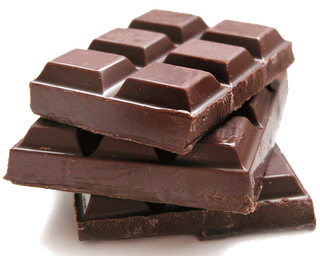
                                             fig. 1 cocoa
                                           fig. 2 chocolate 


    Dark chocolate lower your risk of heart attack, diabetes and other metabolic diseases, when taken every day, because it contains high levels of flavonoids were not found in white and milk chocolate.As you know, heart disease is the leading cause of death worldwide. And eating dark chocolate every day, it can reduce cardiovascular events such as heart attack and stroke in people with metabolic syndrome (a group of factors that increase the risk of heart disease and diabetes).Thus the results of a recent study conducted by Australian researchers, recently.Dark chocolate (dark chocolate) contains at least 60 percent cocoa is rich in flavonoids - known to have cardio-protective effects. In their study, the research team from Melbourne, Australia used a mathematical model to predict the long-term health effects and cost-effectiveness of consumption of dark chocolate every day for 2013 people at high risk of heart disease.All the participants had high blood pressure and met the criteria for metabolic syndrome, but has no history of heart disease or diabetes and are undergoing therapy lowers blood pressure.With 100 percent compliance (best case scenario) conducted the respondents, the results showed that the consumption of dark chocolate every day could potentially prevent 70 fatal and 15 non-fatal cardiovascular events per 10,000 people treated for 10 years.Even when the compliance rate is reduced to 80 percent, the incidence of non-fatal and fatal potentially avoidable by 55 and 10 per 10,000 people treated for 10 years, and still be regarded as an effective intervention strategy.The authors emphasize that the only non-fatal stroke and non-fatal heart attacks assessed in their analysis, and the potential effects on other cardiovascular events, such as heart failure, remains to be tested.Also important, they say, is that the protective effect is only evident in dark chocolate that contains at least 60-70 per cent cocoa. So, do not apply to milk or white chocolate. Perhaps this is due to its high flavonoid found only in dark chocolate.However, they concluded that blood pressure and cholesterol-lowering effect of dark chocolate plain "can be an effective strategy, and cost-effective for patients with metabolic syndrome (diabetes and do not)."Powdered cocoa / chocolate powder / cocoa powderCocoa is made from copra / cocoa pulp after being separated brown fat. Cake is finely ground to form the flour brown.Cocoa beans are cleaned and roasted, then shells removed and the meat is taken. The meat is then milled cocoa beans to make chocolate liquor, which is a solid cocoa butter chocolate. Then separated between brown butter and the remaining solids. The remaining solids are then processed into cocoa powder.Cocoa powder there are 2 types, namely the process of natural cocoa and cocoa by the Dutch. Cocoa naturally slightly acidic, but the Dutch process cocoa is treated with an alkaline solution to raise pH levels. Process Dutching darker brown and make it softer. Dutch process cocoa is preferable to make hot chocolate for soft aroma. Most brands of cocoa powder on the market is a natural cocoa.Natural cocoa powder is made from pureed chocolate or dark chocolate bar, by removing most of the fat down to 18-23%.
    1. Couverture / coverture: is the best chocolate, the cocoa butter content. Sometimes called chocolate coating. Coverture available as bittersweet, semisweet, white, and milk chocolate. Very nice to dye because it is liquid when melted. Typically used at parties for chocolate waterfall.
    2. Premium chocolates: Typically contains about 50-70% cocoa solids. Because it contains less sugar and perhaps also a bit of vegetable oil, dark chocolate contains fewer calories than chocolate products in general.
    3. Cocoa butter / butter chocolate: Shaped like a thick paste, made from 50% cocoa fat, added sugar, flavor and thickening. Usually used to make ice cream or dessert variety.
    4. Chocolate pasta / pasta Chocolate: Made from the extract of brown, viscous liquid form and is sold in bottles. Often used as a conduit of flavor in cookies, cakes, puddings, and beverages.
    5. Meises / rice chocolate: a chocolate product made slurry mixture of pure chocolate or cocoa solids, cocoa fat, or cooking oil, sugar, milk, Essens, and lecithin. Usually used as a sprinkling of bread and cake decoration. Shaped like rice with different colors.
    6. Bitter chocolate (bitter chocolate) / unsweetened chocolate: Chocolate bars is bitter chocolate (unsweetened) that contains no sugar and is often used in making the dish. Compared unsweetened cocoa sweetened cocoa is the best chocolate to make a delicious dessert. Chocolate is widely used as a cake mix so often called "baking chocolate". The solid chocolate is a raw material for cooking chocolate (cooking chocolate), the calorie content per 100 grams is 504 calories.
    7. Chocolate Cooking: Cooking chocolate made up of sugar, Essens, lecithin, milk or often referred to as compound chocolate.
    8. Dark chocolate: it feels more intense, darker, and more nutritious content of chemical components for good health. Dark chocolate is pure chocolate with no milk content. Chocolate contains 15% melted chocolate, cocoa powder and chocolate oil.
    9. Semisweet chocolate: dark chocolate that has a cocoa butter and sugar added. Semisweet slightly sweet and often used to make a dessert. Chocolate is usually referred to as the Dark Cooking Chocolate (chocolate cook concentrated), and brown fat by 27%.
    10. Sweet chocolate: Chocolate has a fat content similar to semisweet chocolate, but sugar embodied more. Commonly used to decorate the cake and serving the cake.
    11. Chocolate milk: milk contains at least 12%, 25% cocoa, and lots of sugar. Chocolate milk is very liked by children because it tastes sweet and gentle. Chocolate is easily burned when melted. Chocolate milk contains the lowest antioxidant because it is made from milk, sugar, and other additives are added to the chocolate liquor.
    12. White Chocolate: Chocolate is not because it did not contain cocoa. White chocolate is made from sugar, brown oil, milk, lecithin, and Vanilla. If the oil is added in it is not chocolate, then mix it called white coating.Cokelat widely used as coating cakes and as decoration.
    Of the many types of chocolates processed only dark chocolate contains flavonoids which are excellent if consumed.A nutrition expert Tammy Roberts also said flavonoids are also found in berry's fruit that taste very good when covered with dark chocolate. Tammy Roberts said the benefits of eating chocolate covered berry which were both contain antioxidants that are important for immune function and preventing infections.

                               fig. 3 berry's fruit covered chocolate

    BERRY'S FRUIT


                                          fig. 4 berry's fruit

    Based on the list of Food Composition (DKBM), in 100 grams of berry contains as much energy as 37 kcal, protein 0.8 g, fat 0.5 mg, carbohydrate 8.3 g, 30 mcg folic acid, 28 mg calcium, phosphorus 27 mg, Fe 0.8 mg, vitamin A 60 SI (International Units), vitamin B1 0.003 mg, and 89.9 g of water.

    More details as follows:

    • Saponins (glycosides which are found in plants) 
    • Favonoida (an active chemical compound that has been successfully studied, known as silymarin from plants silybum marianum L. The results showed that silymarin can be used as a remedy or protection from heart disease / anti-hepatotoxic action)
    • Polyphenols (functioning as an antioxidant)
    • It has antioxidant properties
    • Has antibacterial properties
    • Vitamin C
    Efficacy and benefits of Berry's fruitThe blueberry has many properties and benefits, such as:
    • thrush medication. For thrush medication used 10 grams of fresh berry's fruit, washed, and then eaten as well.
    •  Suspected can help fight cancer
    • Treating ulcers (made fruit juice and drunk)
    • Helps against typhoid
    • Relieve the symptoms of diarrhea

    Most berries contain antioxidants (vitamin A in the form of beta-carotene, vitamin C, and E).Therefore, the berries is very important for immunity because it can neutralize free radicals responsible answers with the disorder in the body. Berries may protect the body from infection.The high antioxidant content makes berrymampu deeply cleanse the body and delay the aging process.Berry's fruit are also a good source of vitamins and minerals to produce a source of energy. Berry and rich in vitamin C is 60 mg. This amount is equivalent to the daily needs. Although high in vitamin C and tastes sour, but vitamin C does not give harmful side effects to the stomach.